
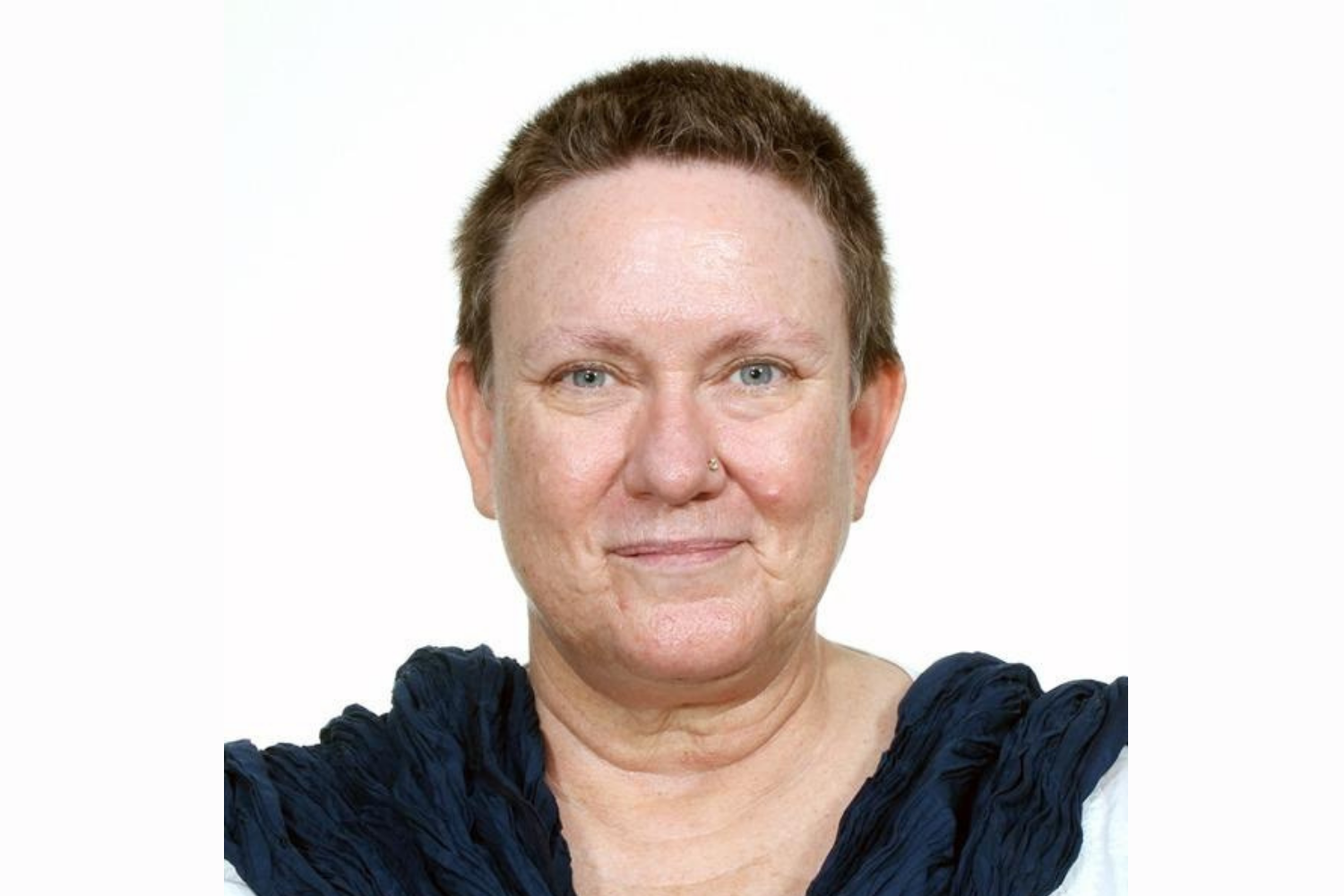
A Portrait of Trasie Sikka, Ayurvedic Student and Caregiver
Trasie Sikka is not easy to pin down on a calendar. When CAAM finally caught up with her, she was in Orange County, splitting her attention between visiting her mother, catching up with friends, and managing a stack of case studies, a fitting picture of the balancing act that defines her life as a student at Kerala Ayurveda Academy (KAA) in Milpitas, California.
Anyone who has watched Trasie move through her coursework knows she brings a rare depth of engagement to her studies. She has become, almost by accident, one of the steadying forces of her cohort, the kind of student whose organization and commitment quietly raise the bar for everyone around her.
Trasie did not arrive at Ayurveda by a straight line. She came to it after a rigorous degree in Political Science, and only much later in life did medicine reveal itself as a calling rather than a subject.
She traces the shift back to a friend's memorial. Speaker after speaker stood up that day and said some version of the same thing: they were where they were because that friend had always told them that education is not time-bound. The phrase lodged itself in Trasie and became something of a personal mantra, proof that learning has no expiration date, and that Ayurveda tends to arrive exactly when a person is ready for it.
In truth, the medicine had been present for years before she ever named it as her path. Having married into an Indian family, she absorbed pieces of Ayurveda almost by osmosis, background noise she didn't yet know she was listening to. That changed when her husband was diagnosed with a serious, debilitating illness. Searching desperately for anything that might stabilize him, she found her way to Ayurveda in earnest.
She wasn't a student yet, just a wife trying to save her husband, working her way through Dr. Vasant Lad's books late into the night. When she brought her father-in-law to the United States so she could care for him, too, the learning accelerated further, out of necessity. One night, with both men gravely ill, she pored over a mountain of texts trying to construct a therapeutic dinner that might bring some relief. It worked. Her husband looked at her afterward and told her, simply, that she needed to find a formal program.
Two weeks later, she enrolled at Kerala Ayurvedic Academy
There is a spiritual thread running underneath all of it, too. Early in her marriage, her Guru had assigned her two sevas, acts of selfless service, and the first was to care for her in-laws. She has come to see her entire Ayurvedic path as an extension of that seva. As she puts it, when a Guru sets you on a path, you rarely see the whole map at once. The trajectory only becomes clear years later.
Trasie is now in the final five months of the Ayurvedic Practitioner (AP) program at KAA, a rigorous, classical education built on the Ashtanga Hridayam, with a heavy emphasis on disease management, or Aaturasya Vikara Prashamanam.
The coursework goes far beyond foundational physiology. Students master the interplay of Doshas, Subdoshas, Dhatus, and Malas, and are expected to develop real command over complex clinical assessment, the progression of pathology (Samprapti), and advanced diagnostic method. Because the program's focus is management, students also work through complex formulations, the mechanics of Panchakarma, and herbology tailored to the individual patient, or rogi.
All of this runs alongside internships, extensive case studies, a final thesis project, and the more old-fashioned demand of memorizing chapters four through twelve of the Ashtanga Hridayam. It is, by her own account, demanding, but it succeeds in anchoring deep philosophical study into something practical and clinical.
Stepping into a classical lineage this way requires real discipline, and Trasie says the most eye-opening part of her training has been discovering just how powerful the fundamentals are. An Ayurvedic Health Counselor, she points out, can reshape a person's life through nothing more exotic than diet, lifestyle, and daily routine, tailored to that person's Prakriti and current Vikruti.
She has watched Dinacharya, daily routine, work as a genuine intervention for people navigating very modern struggles: chronic stress, ADHD, caregiver burnout. Everyone wants to skip ahead to elaborate herbal formulations, and those have their place, but she has come to believe the real foundation of advanced clinical work is meeting people exactly where they are, physically, mentally, spiritually, and helping them make the small, incremental shifts that actually move the needle.
Caregiving, Community, and What Comes Next
Trasie's bandwidth outside of medicine and clinic is famously tight; she is, first and foremost, a full-time caregiver. Even so, she has been carving out energy for a project close to her heart: finding creative, grassroots ways to introduce classical Ayurveda to underserved populations who may never have encountered it, built around accessible shifts in diet and lifestyle.
Her clinical future is shaped by the same lived experience. Given her years as a caregiver, her heart is firmly in geriatric care. She wants to work with senior populations and eventually consult for the businesses and facilities that serve them, and she is especially drawn to building out an Ayurvedic framework for palliative and hospice care, that space where a cure may no longer be the goal, but comfort, dignity, and quality of life absolutely are.
Trasie has become something of a student leader in shaping how her generation talks about the future of medicine, and she is candid about where she thinks that future lies. Most Western-trained practitioners, she says plainly, are not going to open traditional urban clinics and compete head-to-head with BAMS-trained doctors for the same patients, and that's fine. The future of American Ayurveda, in her view, is expansion rather than replication.
She already sees it happening in the Bay Area, where personalized medicine practices are bringing Ayurvedic Practitioners onto clinical teams alongside MDs and TCM practitioners, and where Ayurvedic Health Counselors are embedding foundational wellness work into yoga studios and corporate wellness programs. The opportunities, she believes, are much bigger than the traditional clinic model; practitioners just have to be willing to look for them in new places.
Asked what she'd tell someone deciding whether to commit to formal Ayurvedic study, Trasie doesn't soften it: it's hard work, and it demands full commitment to both academic rigor and personal transformation. You cannot heal others, she says, until you've faced and healed yourself; that's simply part of the curriculum, not optional. No one needs a background in Sanskrit or Western anatomy to begin; the academy will teach that. What's required is relentless curiosity and the willingness to put in the time. Bring that, she says, and the rewards, clinical and personal, are unmatched.
Building Evergreen Ayurveda
As for what's next, this conversation turned out to be something of a catalyst. It pushed Trasie to finally begin building her own digital footprint under the practice name Evergreen Ayurveda, with a website in the works. She's looking forward to connecting with the wider community there soon, sharing clinical insights and updates as her practice takes shape.
It's a fitting name, evergreen trees hold their color and their leaves through every season, a quiet symbol of the vitality and steady wisdom Ayurveda is meant to cultivate.
What doesn't always make it into an interview is the quieter work Trasie does behind the scenes: the WhatsApp groups she keeps active, the encouragement she offers fellow students, the way she keeps the candle burning so others have somewhere to come back to. It may not read as a headline achievement, but it's the kind of steady presence that shapes a community as much as any thesis project does.
Trasie is currently seeing patients as part of her clinical program and can be reached at trasie@evergreenayurveda.org, and you can check out her work at www.evergreenayurveda.org for anyone interested in following or supporting her Ayurvedic journey.
Alexeis Filipello is an Ayurvedic practitioner, licensed esthetician, culinary educator, and business owner with a background in culinary arts and holistic skincare. Her work integrates skin treatments and a food-as-medicine approach for optimal skin health.
Learn more at www.goldcitywellness.com
